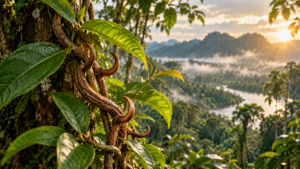
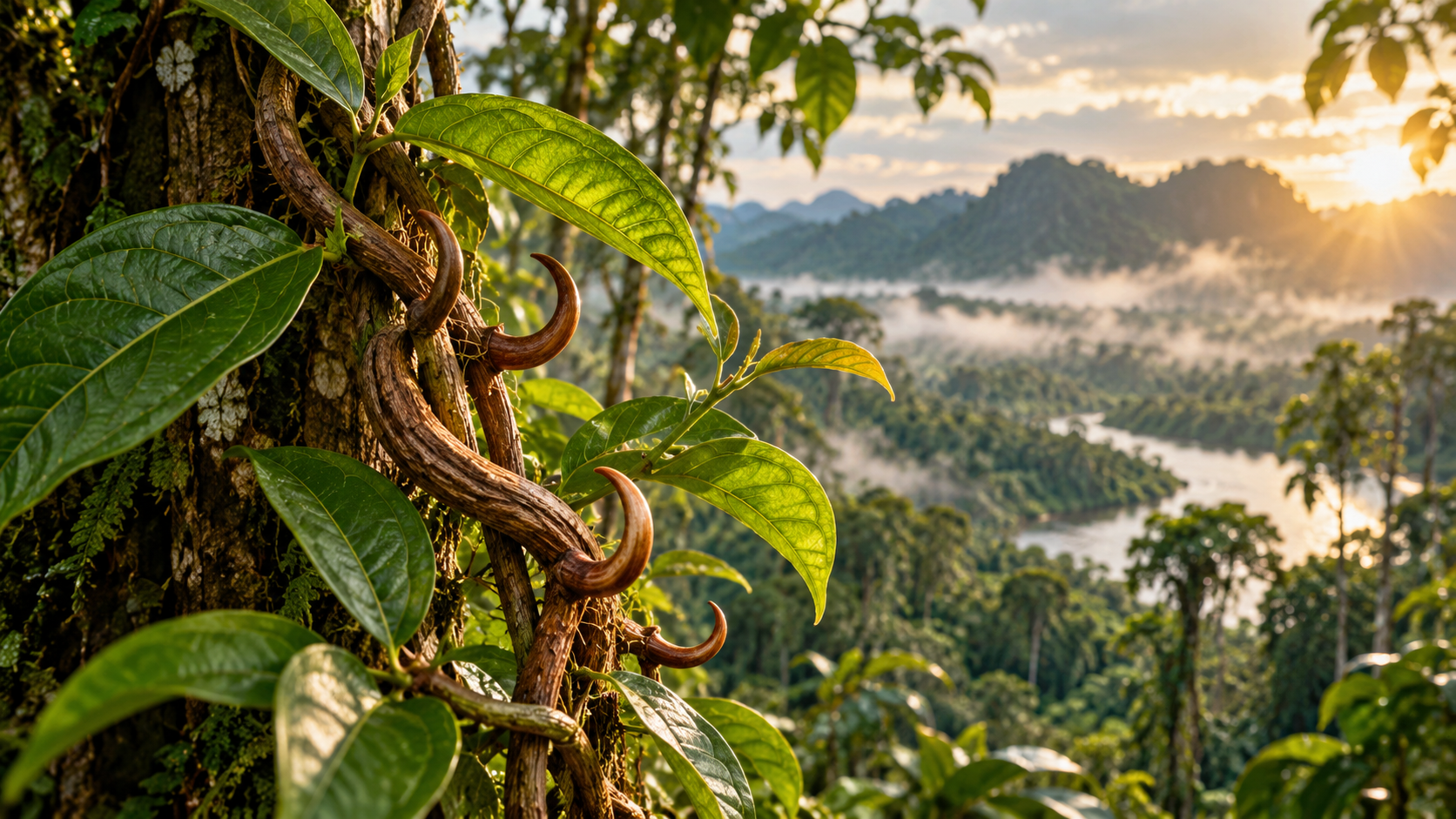
Deep in the Amazon basin grows a woody, climbing vine capable of stretching more than a hundred feet into the rainforest canopy, its stems armed with curved, hooked thorns that spring from the base of each leaf pair. To the Spanish-speaking communities who have known this plant for centuries, those thorns gave it an unmistakable name: uña de gato — literally, “cat’s claw.” In English, the name stuck just as firmly, and it’s how most Americans now know Uncaria tomentosa, one of the most storied botanicals to emerge from South American herbal tradition.
The physical plant is genuinely striking. Its woody vine, or liana, can grow thick enough to resemble a small tree trunk at its base while still climbing and twisting through the branches of host trees far overhead. The paired, curved thorns that give the plant its name aren’t decorative — in the wild, they function as climbing hooks, letting the vine anchor itself to surrounding vegetation as it races toward sunlight through the dense rainforest canopy.
This is a plant that has earned its reputation the slow way: through generations of documented traditional use, a genuinely interesting botanical identity, and a growing body of modern research that has taken traditional claims seriously enough to actually test them. This guide is a deep dive into all three — the plant’s Amazonian origins, its ethnobotanical history, the real science behind its modern use, and what actually separates a high-quality Uncaria tomentosa product from the diluted alternatives crowding the market.
What makes Uncaria tomentosa‘s story particularly worth telling isn’t just its chemistry — it’s the fact that this plant sits at a genuine intersection of two knowledge systems that don’t always speak to each other. On one side, generations of Indigenous Amazonian communities developed a detailed, empirical understanding of this vine’s effects through direct, sustained observation. On the other, modern pharmacology has spent the last several decades independently identifying the specific alkaloid compounds responsible for many of those traditionally observed effects. Few botanicals on the US supplement market can claim that level of continuity between ancestral knowledge and contemporary science, and it’s exactly why Uncaria tomentosa deserves a deeper treatment than a typical listicle can offer.
Ancestral Roots & The Pristine Amazonian Habitat
The Habitat
Uncaria tomentosa is native to the tropical rainforests of Peru and the broader Amazon basin, thriving specifically in the high-rainfall, nutrient-dense soils found at elevations generally between 600 and 2,500 feet. This is a plant adapted to genuinely demanding conditions — dense canopy competition for light, high humidity, and the specific soil microbiome of undisturbed primary and secondary rainforest. It’s not a plant that thrives in cultivation the way many commercial herbs do, which is part of why sourcing and sustainable harvesting (covered later in this guide) matter so much for the integrity of the final product.
The Asháninka Legacy
The traditional use of uña de gato is inseparable from the Indigenous peoples of the Peruvian Amazon, and the Asháninka people in particular are widely credited as the traditional keepers of this botanical knowledge. The Asháninka, one of the largest Indigenous groups in the Peruvian Amazon, developed a deep, generational understanding of the rainforest’s plant life, and Uncaria tomentosa held a genuinely significant place within that knowledge system.
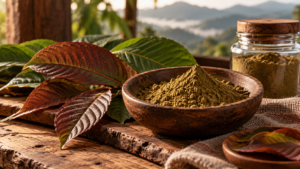
Traditional use centered specifically on the vine’s inner bark, harvested and prepared as a tonic used for immune vitality and joint recovery — the same two applications that, centuries later, would become the primary focus of modern clinical research into the plant. This continuity between traditional use and modern scientific inquiry is one of the more compelling aspects of Uncaria tomentosa‘s story: this isn’t a case of marketing retrofitting ancient credibility onto a new product, but a case of contemporary pharmacology circling back to validate observations Indigenous communities had already made through generations of direct experience.
It’s worth being respectful and precise about what this history does and doesn’t mean for a modern consumer. The Asháninka’s traditional knowledge represents genuine ethnobotanical expertise, developed and refined over a timescale no modern research program could replicate. At the same time, traditional use and modern clinical validation are two distinct forms of evidence, and a responsible guide to this plant treats both honestly — crediting the origin of the knowledge accurately while still applying the same evidentiary standards to health claims that any well-researched botanical deserves.
Botanical Identification: Uncaria Tomentosa vs. Uncaria Guianensis
Not all cat’s claw is the same plant, and this distinction matters more than most consumers realize. Two species dominate the wild cat’s claw population: Uncaria tomentosa and Uncaria guianensis, and they differ in a way that directly affects which one belongs in a dietary supplement.
The key difference comes down to alkaloid chemistry. Uncaria tomentosa is prized specifically for its higher density of pentacyclic oxindole alkaloids (POAs) — the compound class most closely associated with the immune-modulating and antioxidant properties that drive modern interest in this botanical. Uncaria guianensis, by contrast, tends to carry a higher proportion of tetracyclic oxindole alkaloids (TOAs), a chemically distinct class of compounds with more cardiotropic activity — meaning effects more closely tied to cardiovascular and central nervous system function rather than the immune-focused activity POAs are known for.
This distinction is exactly why Uncaria tomentosa has become the preferred species for modern dietary supplements, while Uncaria guianensis — though still used in some traditional and topical preparations — is less commonly the basis of standardized extracts. A quality-focused product should specify which species it’s derived from, and ideally confirm a POA-dominant, low-TOA profile, since research has suggested TOAs may actually work against some of the beneficial effects POAs are associated with when both are present in the same extract.
Botanical Alert: “Not to Be Confused With”
This is a critical distinction for anyone researching cat’s claw on their own. The medicinal Uncaria tomentosa — the Amazonian vine described throughout this guide — should never be confused with Macfadyena unguis-cati, an entirely different, unrelated plant that also goes by the common name “cat’s claw vine” in English.
Macfadyena unguis-cati is a fast-growing ornamental and invasive vine commonly found climbing fences and trees across the Southern United States, including Florida, Texas, and other warm-climate states. It earns its shared common name from its own set of claw-like climbing tendrils, but botanically, it belongs to an entirely different plant family and has no relationship to the Amazonian Uncaria tomentosa. It is not used medicinally, is generally considered toxic if ingested, and should never be foraged, brewed, or consumed under the assumption that it’s the same herb discussed in this article. If you’re sourcing cat’s claw from anywhere other than a reputable, verified supplement brand, confirming the botanical (Latin) name — Uncaria tomentosa, specifically — is a non-negotiable safety step.
Modern Science: The Real Una de Gato Benefits
Traditional use is one form of evidence; modern pharmacology is another, and Uncaria tomentosa has attracted a genuinely substantive body of research examining three primary mechanisms. It’s worth noting that English-language search interest in this plant is split across two spellings — with and without the Spanish tilde (una de gato and uña de gato both refer to the same plant) — a reflection of how the herb has crossed from Spanish-language ethnobotanical literature into mainstream English-language wellness content without a single, standardized spelling taking hold yet.
Immune Modulation
The pentacyclic oxindole alkaloids that define high-quality Uncaria tomentosa extracts have been studied for their role in supporting phagocytosis — the process by which immune cells identify and engulf foreign particles and pathogens — and in supporting healthy white blood cell activity more broadly. Research suggests this isn’t simple immune stimulation in one direction, but rather a modulating effect, helping optimize immune cell activity within a healthy range. This is also the mechanism behind cat’s claw’s specific contraindications for people with autoimmune conditions or those on immunosuppressant medication, covered in more detail in our other guides on this topic.
Joint & Cartilage Protection
One of the better-studied applications of Uncaria tomentosa involves its effect on pro-inflammatory cytokines, particularly TNF-alpha (tumor necrosis factor-alpha), a signaling protein heavily implicated in joint inflammation and cartilage degradation. Small clinical trials examining cat’s claw in osteoarthritis and rheumatoid arthritis populations have found reductions in joint pain and tenderness, consistent with a TNF-alpha-blocking mechanism, though the research base remains smaller than more extensively studied anti-inflammatory botanicals.
Antioxidant Activity
Uncaria tomentosa‘s alkaloid and polyphenol content has demonstrated meaningful free-radical-scavenging activity in laboratory research, a mechanism relevant to protecting cellular DNA from oxidative damage — one of the underlying processes linked to cellular aging and chronic disease risk more broadly. This antioxidant profile is part of what traditional use describes more generally as “immune vitality,” now given a specific, testable biochemical explanation.
Sustainable Sourcing & The Preservation of the Jungle
Uncaria tomentosa‘s rising global popularity has created a real conservation challenge, and it’s worth understanding why sourcing practices matter as much as they do for this particular botanical.
Historically, unsustainable harvesting meant cutting down or completely stripping wild vines to access their bark — a practice that can kill the plant outright and, at scale, threatens wild populations across harvested regions of the Peruvian Amazon. Ethical, sustainable harvesting takes a fundamentally different approach: skilled harvesters strip only sections of the outer bark from mature vines, leaving the living plant intact. A properly harvested vine can fully regenerate its bark over a period of a few years, allowing the same plant to be sustainably harvested again in the future rather than destroyed for a single batch.
This matters for more than conservation ethics alone. Sustainable harvesting practices are generally correlated with more careful, quality-conscious supply chains overall — a harvester taking the time to preserve the living vine is also more likely to handle post-harvest drying and processing with the same level of care, which directly affects the purity and potency of the final product. When you see a brand explicitly discuss sustainable, regrowth-friendly sourcing, it’s a meaningful signal about the rest of their supply chain, not just an environmental talking point.
There’s also a direct economic argument for sustainability that’s easy to overlook. A wild vine population that’s harvested to extinction in a given region represents a one-time economic gain followed by a permanently lost resource — for local communities and commercial suppliers alike. A vine population managed for regrowth, by contrast, represents a renewable resource capable of supporting harvesting indefinitely. The growing US and global demand for Uncaria tomentosa makes this distinction more urgent, not less: rising demand without a corresponding commitment to sustainable practice is exactly the scenario that has depleted other high-demand medicinal plants in the past.
Ancestral Wisdom Meets Modern Convenience: The TomoX Standard
Everything covered so far — the Asháninka’s traditional use, the POA-dominant species distinction, the modern research into immune and joint support, and the importance of sustainable sourcing — converges on a single practical question: how do you actually access a genuine, high-quality version of this plant in your daily life?
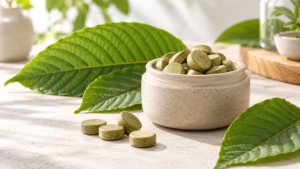
This is exactly where TomoX represents the next evolution of this ancient botanical rather than just another capsule on a shelf. Each TomoX tablet is meticulously designed to deliver 300mg of genuine, high-potency Uncaria tomentosa extract — a clean, clearly stated dose that respects the pure, plant-based power of traditional Peruvian herbs rather than diluting it behind a vague proprietary blend.
TomoX also solves the single biggest barrier that’s kept traditional uña de gato tea from becoming a mainstream daily habit: taste. Raw uña de gato bark, brewed as tea, carries a notoriously bitter, earthy flavor that most modern consumers simply won’t tolerate on a daily basis. TomoX eliminates that barrier entirely with three genuinely enjoyable flavors — Strawberry, Watermelon, and Blue Raspberry — delivered in an ultra-convenient, portable blister pack format that requires no brewing, no water, and no acquired taste for bitter botanicals.
None of that convenience comes at the cost of safety or transparency. TomoX is third-party lab-tested, fully compliant nationwide across all 50 US states, and backed by publicly accessible Certificates of Analysis — giving consumers the same confidence in purity that a careful buyer would demand from any botanical sourced from raw plant material.
Contextual Market Curation (US Brands)
For readers comparing options across the broader cat’s claw category, here’s an objective look at how several other established US brands approach this botanical.
Nature’s Way (Cat’s Claw Bark Capsules) — Nature’s Way is a long-established herbal supplement manufacturer with decades of presence in mainstream US retail, offering cat’s claw in a traditional bark capsule format consistent with the brand’s broader straightforward, accessible positioning.
Gaia Herbs (Cat’s Claw Liquid Phytocaps) — Gaia Herbs is well known in the herbal industry for its seed-to-shelf traceability program, and its cat’s claw comes in a liquid phytocap format — a liquid extract encapsulated for a bioavailability-focused alternative to standard dry capsules.
Solaray (Cat’s Claw Bark Extract) — Solaray has built its reputation specifically around herbal extract specialization, and its cat’s claw bark extract reflects that positioning, appealing to consumers who want a standardized extract rather than a raw bark capsule.
Ethnobotanical Quick-Reference Matrix
| Feature | Uncaria tomentosa | Uncaria guianensis |
|---|---|---|
| Common Name | Cat’s Claw / Uña de Gato | Cat’s Claw (less common in US supplements) |
| Dominant Bioactives | Pentacyclic oxindole alkaloids (POAs) | Tetracyclic oxindole alkaloids (TOAs) |
| Primary Activity | Immune modulation, antioxidant, anti-inflammatory | Cardiotropic, more limited traditional/topical use |
| Native Habitat | Peruvian Amazon, 600–2,500 ft elevation | Overlapping Amazonian range |
| Traditional Use | Immune vitality, joint recovery (Asháninka tradition) | More localized traditional applications |
| Modern Supplement Use | Preferred species for standardized extracts | Less commonly used in commercial extracts |