Inflammation is supposed to be temporary. In its acute form, it’s your immune system doing exactly what it’s designed to do — responding to injury or infection, then standing down once the threat has passed. The problem modern medicine has increasingly focused on is what happens when that response doesn’t stand down: chronic, low-grade systemic inflammation that persists for months or years, quietly contributing to joint stiffness, tissue degradation, and cellular stress long after any original injury has healed.
Left unaddressed, this kind of persistent inflammatory activity has been linked in the research literature to a wide range of downstream effects — reduced joint mobility, accelerated cartilage breakdown, and cumulative stress on cellular repair systems throughout the body. It’s a slow-moving process, which is part of what makes it so easy to underestimate until it shows up as daily stiffness, recurring discomfort, or a body that simply doesn’t move the way it used to.
This is the exact backdrop driving a real, measurable shift in consumer behavior: a growing number of people managing chronic inflammation are looking toward natural anti-inflammatory supplements as a sustainable, daily-use complement to (not necessarily a replacement for) conventional approaches like NSAIDs. Part of that shift is about side-effect profile — long-term NSAID use carries well-documented gastrointestinal and cardiovascular risk considerations, including increased risk of ulcers, gastrointestinal bleeding, and elevated cardiovascular risk with prolonged daily use — and part of it is simply a preference for interventions that can be maintained indefinitely as part of a daily wellness routine rather than reached for only during a flare.
This preference has real clinical logic behind it, even setting consumer sentiment aside. Chronic inflammation, by definition, is a long-term physiological state, and managing it effectively often benefits from an equally long-term intervention strategy — one that a patient can sustain daily for months or years without the cumulative risk profile that comes with high-dose, long-term NSAID use. That’s precisely the gap natural anti-inflammatory supplements are positioned to fill: not necessarily as a replacement for medication when it’s genuinely needed, but as a foundational, daily layer of support that can reduce overall reliance on stronger interventions over time.
What follows is an evidence-graded breakdown of the five natural interventions with the most substantial research behind them, presented the way a careful clinical resource should: with an honest accounting of what the science actually supports, not just what’s popular.
The Evidence-Based Roundup: Graded by Scientific Strength
Turmeric & Curcumin — Evidence Grade: Strong
Mechanism: Curcumin, turmeric’s primary active compound, has been extensively studied for its inhibitory effects on NF-kB and COX-2 — two of the central signaling pathways your body uses to initiate and sustain an inflammatory response. By dampening activity along both pathways, curcumin is believed to reduce the downstream production of pro-inflammatory cytokines and prostaglandins.
Evidence quality: This is one of the most heavily researched natural anti-inflammatories on the market, with numerous randomized controlled trials — several specifically in osteoarthritis populations — showing meaningful reductions in pain and inflammatory markers, in some cases performing comparably to low-dose NSAIDs over short study periods. The major caveat researchers consistently flag is curcumin’s naturally poor bioavailability: consumed on its own, very little curcumin actually reaches the bloodstream intact, which is why formulation matters enormously here and why raw turmeric powder or a basic capsule tends to underperform the clinical trial data built on enhanced-absorption formulations.
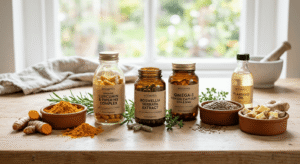
US Brand Pick: Thorne Curcumin Phytosome, built on phytosome technology designed specifically to address curcumin’s absorption problem, and Gaia Herbs Turmeric Supreme, which pairs turmeric with complementary botanicals in a full-spectrum formulation. Given the bioavailability issue, a standardized, enhanced-absorption formulation like these is generally a better choice than plain turmeric powder.
Omega-3 Fatty Acids / Fish Oil — Evidence Grade: Strong
Mechanism: EPA and DHA, the two primary omega-3 fatty acids in fish oil, work through competitive inhibition of the arachidonic acid pathway — essentially crowding out the substrate your body would otherwise use to produce pro-inflammatory eicosanoids, while also serving as precursors to specialized pro-resolving mediators involved in actively resolving inflammation rather than just suppressing it.
Evidence quality: Omega-3 supplementation has one of the deepest bodies of clinical research in this entire category, including multiple meta-analyses showing meaningful benefit specifically in rheumatoid arthritis, where omega-3s have been associated with reduced joint tenderness and, in some studies, reduced reliance on NSAIDs. This is arguably the best-substantiated intervention on this list, benefiting from decades of cardiovascular and inflammatory research that happened to converge on the same conclusion from two different research directions.
US Brand Pick: Nordic Naturals Ultimate Omega, well known in the industry for its IFOS-certified purity testing, and Viva Naturals Triple Strength Omega-3, a higher-concentration option for those wanting a more potent daily dose in fewer capsules.
Ginger Root — Evidence Grade: Moderate
Mechanism: Ginger’s bioactive gingerols and shogaols are believed to suppress leukotriene and prostaglandin synthesis through mechanisms that partially overlap with how NSAIDs work, though with a milder overall effect. This dual-pathway action is part of why ginger has such a long history as one of the more reliable herbs for joint pain in traditional medicine systems.
Evidence quality: Several clinical trials, particularly in osteoarthritis populations, have found modest but measurable reductions in pain and stiffness with regular ginger supplementation. The effect size tends to be smaller and less consistent than turmeric or omega-3s, which is why this sits at a moderate rather than strong evidence grade — genuinely useful, but not a heavy hitter on its own. Where ginger tends to shine in practice is as part of a combination approach: several studies pairing ginger with other anti-inflammatory botanicals have shown better results than ginger alone, suggesting its real-world value may lie more in a supportive, complementary role than as a standalone intervention for significant joint pain.
US Brand Pick: Pure Encapsulations Ginger Extract, formulated with the brand’s typical hypoallergenic, minimal-excipient approach, and NOW Foods Ginger Root, a straightforward, accessible option for those wanting to try ginger without a large upfront investment.
Boswellia Serrata (Frankincense) — Evidence Grade: Moderate
Mechanism: Boswellic acids, particularly AKBA (acetyl-11-keto-beta-boswellic acid), work through a notably specific mechanism: direct inhibition of 5-lipoxygenase (5-LOX), the enzyme responsible for producing leukotrienes, a class of inflammatory mediators particularly implicated in joint tissue inflammation.
Evidence quality: Multiple clinical trials using standardized, AKBA-enriched boswellia extracts have shown meaningful improvements in joint pain and function, particularly in knee osteoarthritis, with some trials showing effects within just a few days of starting supplementation — faster than most other options on this list. The evidence is strongest specifically for standardized, high-AKBA extracts rather than generic boswellia powder, which is a meaningful distinction: two products both labeled “boswellia extract” can have dramatically different real-world effects depending on whether the AKBA content was actually standardized and verified.
US Brand Pick: Life Extension 5-LOX Inhibitor with ApresFlex, built around a specific, clinically studied standardized boswellia extract, and Doctor’s Best Boswellia, a well-regarded, accessible standardized option.
Cat’s Claw (Uncaria tomentosa) — Evidence Grade: Moderate to Emerging
Mechanism: Cat’s claw’s pentacyclic oxindole alkaloids (POAs) are believed to modulate immune response, scavenge free radicals, and — in laboratory research — inhibit the production of TNF-alpha, a central pro-inflammatory signaling protein implicated in a wide range of chronic inflammatory conditions.
Evidence quality: Small clinical trials have examined cat’s claw specifically in joint-related inflammatory conditions, including a randomized trial in knee osteoarthritis showing reduced pain with activity, and a trial using it as an adjunct alongside standard rheumatoid arthritis treatment showing reduced tender joint counts. This is genuinely encouraging early evidence, but the trials are small, and cat’s claw sits at a moderate-to-emerging grade rather than “strong” because the research base, while real, hasn’t yet reached the scale of the turmeric or omega-3 literature.
A note on cat’s claw lyme research: Cat’s claw has drawn particular interest in complementary-medicine circles in connection with chronic, vector-borne inflammatory symptoms, including those associated with Lyme disease — largely due to its traditional immunomodulatory reputation and the TNF-alpha research described above. It’s essential to be direct about what this does and doesn’t mean: Lyme disease is a bacterial infection that requires proper medical diagnosis and antibiotic treatment, particularly when caught early, and no herbal supplement — cat’s claw included — should be used as a substitute for that treatment or as a reason to delay seeking medical care for a suspected tick-borne illness. Where cat’s claw shows up in this conversation is strictly as a potential complementary, immune-supportive botanical some patients explore alongside — never instead of — conventional medical treatment, under a physician’s guidance, for general inflammatory symptom support rather than as an antimicrobial treatment for the underlying infection itself.
The Product Pick: Within the cat’s claw category specifically, TomoX stands out as the premium choice for anyone who wants transparency to match the ingredient’s promise. TomoX delivers 300mg of genuine, clean Cat’s Claw extract per tablet — a clearly stated, verifiable dose rather than a vague proprietary blend. Every batch is third-party lab tested, the product is formulated for nationwide compliance, and accessible Certificates of Analysis are published across its full flavor lineup (Strawberry, Watermelon, and Blue Raspberry). For a botanical where sourcing and purity genuinely affect both safety and efficacy, that level of documentation is exactly what separates a trustworthy product from the diluted, unverified cat’s claw extracts that dominate the lower end of this market.
The Ultimate Anti-Inflammatory Supplement Comparison
| Category | Key Active Compound(s) | Mechanism | Evidence Grade |
|---|---|---|---|
| Turmeric & Curcumin | Curcumin | NF-kB / COX-2 inhibition | Strong |
| Omega-3 Fatty Acids | EPA, DHA | Arachidonic acid pathway competition | Strong |
| Ginger Root | Gingerols, shogaols | Leukotriene/prostaglandin suppression | Moderate |
| Boswellia Serrata | AKBA (boswellic acids) | 5-LOX inhibition | Moderate |
| Cat’s Claw | Pentacyclic oxindole alkaloids (POAs) | Immune modulation, TNF-alpha inhibition | Moderate to Emerging |
Buying Criteria: How to Avoid Substandard Extracts
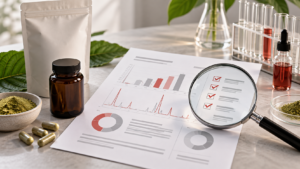
Evidence grade only matters if the product you buy actually delivers the studied compound at a meaningful dose. Before purchasing any natural anti-inflammatory supplement, check for:
- Standardized active percentages. Look for a specific stated percentage of the active compound — curcuminoid content for turmeric, oxindole alkaloid content for cat’s claw, AKBA percentage for boswellia — rather than a vague “extract” with no potency information.
- Third-party lab verification. An independent Certificate of Analysis, ideally batch-specific, confirming both potency and the absence of contaminants like heavy metals, which matters especially for botanicals sourced from raw plant or resin material.
- Clean delivery formats. Favor products free of unnecessary binders, artificial fillers, and excessive excipients — a shorter, more recognizable ingredient list generally signals a more careful formulation process.
- Bioavailability considerations. For compounds like curcumin with known absorption challenges, look specifically for an enhanced-bioavailability formulation (phytosome, liposomal, or similar) rather than a plain, unformulated extract.
- Realistic timelines. Most natural anti-inflammatories require weeks, not days, of consistent use before meaningful effects show up — boswellia is a notable exception with a faster onset in some trials, but treat any product promising overnight results with real skepticism.
- Sourcing transparency. For plant and resin-based botanicals in particular, a named country or region of origin and a clear description of harvesting or extraction method is a meaningful trust signal, since vague sourcing language often correlates with less rigorous quality control overall.
Safety, Contraindications, and Medical Disclaimer
Natural doesn’t mean risk-free, and several of the interventions above carry real interaction considerations worth knowing before you start.
- Blood thinners and anticoagulants. Both omega-3 fatty acids and cat’s claw have been associated with mild anti-platelet or clotting-delay properties in some research, which may increase bleeding risk when combined with medications like warfarin, clopidogrel, or even regular aspirin use. Anyone on anticoagulant therapy should discuss either supplement with their doctor before starting.
- Immunosuppressant medications. Cat’s claw’s immune-modulating properties may work against medications designed to suppress immune activity, including those used post-transplant or for autoimmune conditions — this combination should be evaluated by a physician, not managed independently.
- Surgery considerations. Because of the bleeding-risk profile above, both fish oil and cat’s claw are generally recommended to be paused in the weeks leading up to a scheduled surgical procedure — confirm the specific timeline with your surgical team.
- Gallbladder conditions. High-dose turmeric and ginger may not be appropriate for individuals with gallstones or bile duct obstruction, given their effects on bile production.
- Blood sugar medications. Cinnamon-adjacent botanicals and some anti-inflammatory herbs, ginger included, may have mild blood-sugar-lowering effects in some individuals, which is worth flagging to your doctor if you’re on medication for diabetes, to avoid an unexpectedly compounded effect.
- Pregnancy and breastfeeding. Several of the interventions above, cat’s claw in particular, are generally not recommended during pregnancy or breastfeeding due to insufficient safety data in these populations — default to caution and a physician consultation rather than assuming safety by extrapolation.
None of these cautions are meant to discourage natural anti-inflammatory supplementation broadly — for most healthy adults without the specific risk factors above, these interventions carry a favorable safety profile relative to long-term high-dose NSAID use. The point is simply that “natural” and “risk-free” are not synonyms, and a five-minute conversation with a pharmacist or physician before starting is a small investment against a real, if generally modest, set of interaction risks.